EP 80: YOUR DENTAL PRACTICE IS LOSING TIME AND MONEY. HERE'S THE FIX WITH GREY BONIN
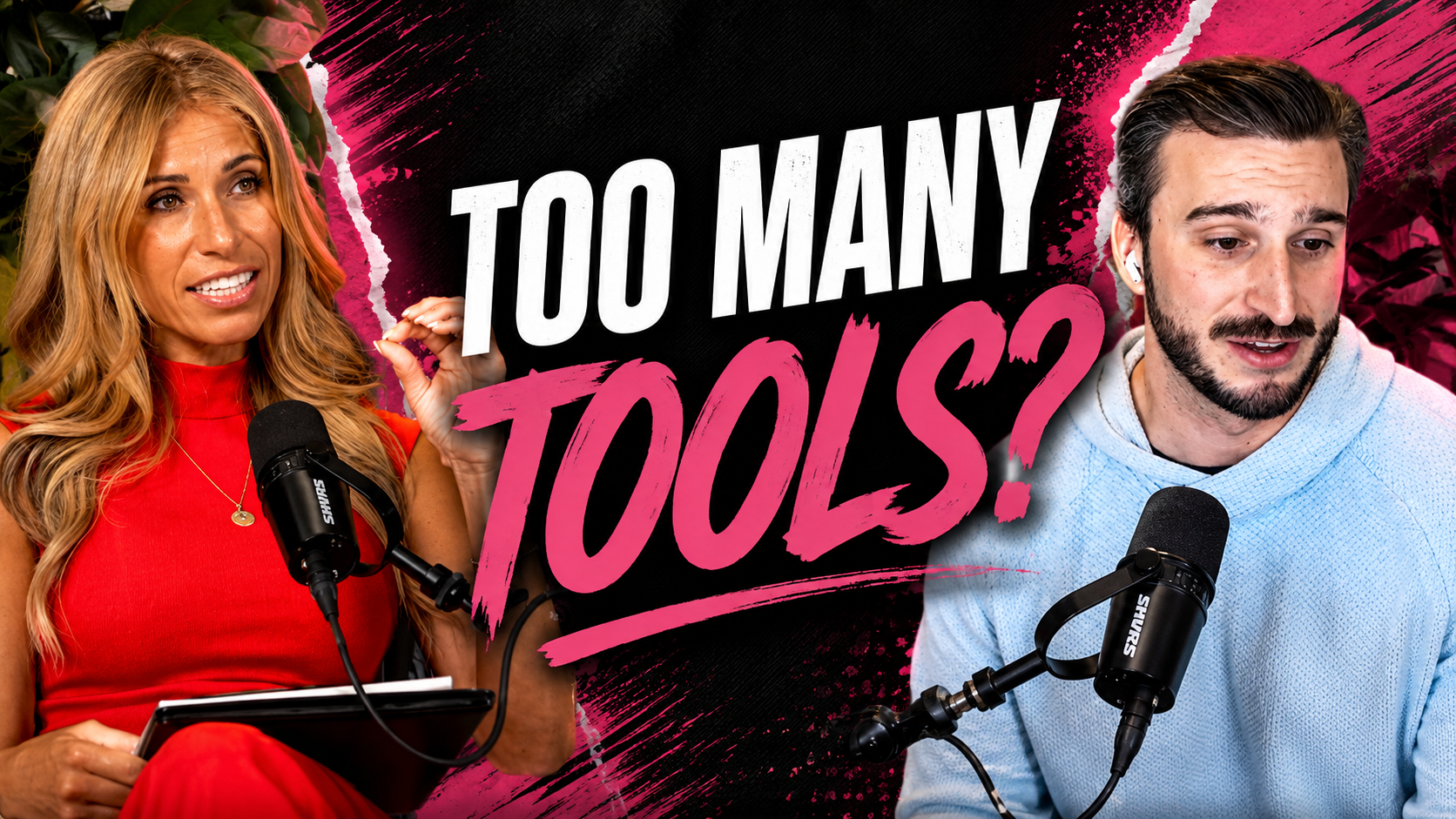


Is your dental practice spending more time managing software than caring for patients? Melissa sits down with Grey Bonin, CEO and Founder of Prahsys, to break down how disconnected dental technology, payment systems, and outdated processes can create unnecessary stress and lost revenue.
They discuss software sprawl, payment transparency, credit card fees, fraud prevention, and how better systems can make dental practices easier to manage and more profitable. Grey also explains how AI and CBCT technology can support clinicians, improve imaging workflows, and help practices make more informed decisions.
If you want to reduce stress, improve efficiency, and build a more sustainable dental practice, this conversation is for you. Subscribe, share it with a dentist, and leave a review.
✨ About the Host & Ways to Work Together
Melissa-Sue Methven hosts Not Alone with Melissa-Sue Methven, and is an author, speaker, and breathwork facilitator guiding emotional, nervous-system, and spiritual healing. She uses storytelling, expert conversations, and lived experience to help people reconnect with their body, release stored emotions, and return to wholeness.
Available for:
- Speaking engagements & keynotes
- Breathwork & nervous system workshops
- Podcast guest features & collaborations
- Faith-based, wellness, and integrative health events
🔗 Inquiries: Breathwork Coach & Speaker | Mélissa-Sue Methven | Phoenix, AZ
📘 The Truth Behind the Smiles explores grief, emotional suppression, faith, and the journey back to self.
📕 Amazon: https://amzn.to/4mSAcEt
🎧 Audible: https://www.audible.com/pd/B0DG5ZZN5C
🌱 Coming Soon: The Gut God Connection & Gut God Blueprint Coaching Program, focused on gut health, nervous system regulation, emotional healing, and faith-aligned living.
✨ Join the waitlist: Melissa Methven
🎧 Subscribe to Not Alone, share episodes, and leave a review.
You are not alone 🤍
00:00 - Why Dental Stress Turns Dangerous
01:05 - Gray Bonin’s Path From Dentistry
04:20 - Technology Fragmentation And Cost Explosion
10:45 - Fraud Risk And Real-Time Money Tracking
15:35 - Cash Discount Versus Surprise Surcharges
19:40 - Missed Calls And Membership Plans
23:00 - Insurance Nonpayment And Claims Automation
26:55 - CBCT Skills Gap And Prognostics AI
37:40 - Lower Radiation Through Computer Vision
46:10 - Trust, Adoption Resistance, And Pricing
52:10 - Tragedy, Presence At Home, And Legacy
59:50 - How To Reach Gray And Closing
Why Dental Stress Turns Dangerous
SPEAKER_00
Welcome back to Not Alone with Melissa Sue Metfin. As you know, I love to share truth, inspiration, but also solutions. After I lost my husband, who was a dentist of suicide, I often ask myself why. And after doing my own work and interviewing many dentists, and a lot of them are my friends, I started seeing a lot of the whys. And one of the major ones is the financial pressures, the heaviness, which starts right out of school. They're half a million dollars in debt. And for me, helping dentists finding solutions, not just by sharing my story, but is also finding how we can shift the industry to make it more human sustainable for the dentists and the patients. So today I am very excited because this is a major solution for many dental practices, dentist owners. And this is going to be benefit not just the dentists, the
Gray Bonin’s Path From Dentistry
SPEAKER_00
owners, but the patients as well. So I want to welcome Gray Bonin, the CEO of Process. So welcome.
SPEAKER_01
Yes, thank you for having me. It is a pleasure to be here with you.
SPEAKER_00
Yes, I am so excited. I mean, ever since I met your team at the Texas Dental Association, I was just so drawn in and curious to find out more. So I'd love to, you know, before people to just get to know you, I know your dad is a dentist as well, right? And you inspire, you wanted to become a dentist. I mean, you I think graduated high school at 16 years old and try to apply to school, but you were too young. You got rejected because you were too young.
SPEAKER_01
Yeah, you know, I um I'm I got the privilege to grow up uh as one of 11 kids. And uh having a big family is something that I've always wanted. And seeing the way that my dad provided uh for us really inspired me to work with him as I was growing up ultimately because I thought I wanted to be a dentist. I realized uh when I graduated from Tech CM that I didn't actually want to be a dentist, I just wanted to be my dad. And so I took, you know, I went down a little bit different of a path. I've always been an entrepreneur, run my own businesses uh since I was young. And so that is ultimately the direction that I went. And now uh I run a company that actually helps solve the issues uh for that that I experienced working in his practice.
SPEAKER_00
So Yeah, I feel you have a really unique, and I always say this this is, you know, God always, you know, plants these things uh because they you were so gifted a young age of finding solution and entrepreneurial. So there was a reason why he directed you not to become a dentist, but you were able to find you have a unique experience where you actually work in a dental practice, you know the struggles, you saw it firsthand with your dad, and now you thought, okay, how can I make this easier for my dad and alleviate a lot of these things that happen in a dental practice? And I know because we owned a dental practice as well for over 15 years in Alaska. And after my husband passed, I took it over and ran it for another year and a half. So, and I became fully uh, you know, I could see everything. I actually wanted to remove everybody off the books, and I wanted to see absolutely everything because I had a little bit of trust issues.
SPEAKER_02
Yeah, right place up, right place up.
SPEAKER_00
You know, and and I because I had seen so often how my husband was taken advantage of. We had gone through a lot of embezzlement, we had gone through a lot of just people taking advantage, right? Because he ultimately all he wanted to do is work in his gifts. You know, I heard him say that all the time, that he loved the skill. And we just wanted to be able to do that, but not so much of the back end, and it's so hard to oversee everything. And so I really saw behind the scenes the struggles that the dentists go through. And now I hear it day on, day in, you know, of successful dentists and they're
Technology Fragmentation And Cost Explosion
SPEAKER_00
struggling, and especially after COVID. So I'd love to, you know, I I just say, you know, many of the dentists have become like such dear friends. So they could they just carry so much pressure. They do. I want you to explain what is process. I really want you to dive in there.
SPEAKER_01
Okay. Well, so if you go to our website, process.com, br a h-s-y-s.com, um, you're gonna see something on there. It says, run the practice, not the software. Uh, that comes from our own experience. You know, we are building solutions because we recognize that dentists go to dental school because they want to be dentists, not so that they can come out and be inundated with a business that is really broken in today's uh technology environment. There's so much under that that we can talk about, and I'm happy to go whatever direction you want to. Um, but we are we're just now uh entering an era where I think that we're that we're actually going to see the amount of different technologies that we need to adopt within our practices actually consolidate to fewer vendors. Uh AI has has enabled that capacity. Um, you know, in in the tech world, we constantly talk about developing the the minimum of uh viable product. How what what is like the bare bones that we can put out there that people will be uh comfortable with using and that we can just improve over time? Well, with what has happened in in the AI uh development, uh specifically around agents, um I my personal opinion is MVPs are dead. You can build you'd be surprised as to how much software you can now uh develop in the same, you know, in a compressed timeline, stuff that used to take years can now be done in months. And so I think I think that part is really interesting. And at process, you know, we started the company a couple of uh a couple years ago to become that platform that that dentists would use. You know, we don't look to displace any of the practice management software because of that that you know the systems are created for electronic health record management, but they're so much above that that core system that a dentist needs to be able to run their business efficiently. And in today's environment, they're going out and they're getting 20 different vendors to make it happen.
SPEAKER_00
And so Yeah, because most have like 10 to 15 systems, right? So there's just so many aspects to the systems in a dental industry, and they don't they don't communicate with each other.
SPEAKER_01
They don't, you know, one of the things I always point dentists towards is when you go look at adopting your a practice management software, go look at the approved vendor list of that software. And what you're gonna find is on top of that, you know, whatever practice management software that is, you're gonna find hundreds of approved vendors. And that sucks because now as a dentist, right, they're having to decide who what subscription they're going to adopt above the practice management software that they're already paying, you know, 800 bucks a month for. Um, you know, the I just so you're aware, Melissa, the average dentist is spending $50,000 a year in software subscriptions. That blow that blows my mind. Like I like, what is that? You know, there's we can it's technology soup is what it is. And um the the our like my real beef with with the fragmentation is it uh prevents us from being able to really have the insights that we need to run an effective business. But even more importantly, it it pulls away from our ability to give our patients the highest standard of care, which is the whole reason that that we that we jumped into this, you know, that we jumped into it in the first place.
SPEAKER_00
Yeah, that's so true. And I think I want you to describe, because when I I looked into it, you know, this system that will oversee everything, even from you know, scheduling, finding out who's who's due, and and it, and I want to remind people this is not taking away anybody's job. It's actually providing the staff, the front desk staff, the assistant, the hygienist, the dentist, the office management to have more time to give patient care and allow the less the administrative stuff. Like oftentimes we wasted so much time on administrative. So it's it's helping, and where you don't see any leakage as well of the finances. I I was looking at how much a dentist can save by having just a system alone to communicate and to also be on top of anything that might be leaking, you know, and and it makes it a lot harder for embezzlement to happen with your program too.
SPEAKER_01
That's right. No, you're you are absolutely correct there. Um a good a good friend of mine, David Harris, he's the CEO of Prosperident. Uh David spoke at one of our events earlier this year, and he said something that really kind of blew my mind. The first stat he gave was that uh seven out of every 10 dentists are at risk for fraud and embezzlement. And then he gave some historical data and said, if you actually look at the total number of cases of fraud and embezzlement in our industry compared to the to the total number of practices that are out there, it actually looks like nine out of every 10 dentists, 70% risk rate is already ridiculous. Like that, I mean, that is the highest amongst the 80 plus domains within the healthcare vertical. And we're not talking about losing 100 bucks here. The average dentist has embezzled over $100,000.
SPEAKER_00
Our office one time was $250,000 and we could never get it back. And then the other time was $150,000.
SPEAKER_01
Yeah.
SPEAKER_00
And we never got back.
SPEAKER_01
It's uh, you know, it's crazy to me. And um, and it's unfortunate because what do we do with those employees who, you know, who've been bezeled uh from us? We fire them. You know, some dentists choose to pursue uh some legal remedy and others don't. And the ones who
Fraud Risk And Real-Time Money Tracking
SPEAKER_01
don't, those office managers who got fired, what what do what do you think they're gonna get gonna do? They're just gonna go right down the street and find another job at the next dentist.
SPEAKER_00
Well, yeah, ours, ours left state because she knew we couldn't get her, you know, from the state of Alaska. And then so she moved out of state and just yeah, started working somewhere else. And she had moved around so much, and it is she can still keep doing what she's doing because she knows it works. So explain to dentists, you know, business owner listening right now, how does process do that? How can it help them?
SPEAKER_01
I well, thank you for uh thank you for asking. So the the first gap that we wanted to address when we were developing our uh financial technology was the risk that our practices are facing when it comes to being defrauded or embezzled from. But how do you how do you do that? And in a current dental environment, most dentists don't even recognize that they have four, five, six different merchant processors running in their office. And with so many different vendors that they're using with back offices and their own subscriptions and places to log in and money to reconcile against, how do you actually keep track of your daily finances? The answer is you can't. Um it's just it's impossible. The the tech the tech fragmentation just in the financial workflow alone makes monthly reconciliation even hard. I mean, much you know, much more importantly, daily reconciliation. So uh we build process. Uh our payments product gives dentists real-time transparency into the numbers within their practice. And we do, and we do this uh because we've consolidated all those vendors that they would otherwise have to go adopt. We've we have built all of that functionality within our own platform. So now you can have one payment solution within your practice actually showing you real-time data for where money is going. And the beautiful part about this is it makes it makes stealing from a practice very hard because as as a uh as like a uh not just a payment ISO, but let me make this part clear. We do not sell anybody else's product. This is not a white label, this is not, you know, what we built, we built over an 18-month period with millions of dollars uh specifically for dentistry uh because of these problems. And so um what what what we do is as a payment processor, we can track the life cycle of your money from end to end. It leaving, you know, the pay either leaving the patient's bank account all the way with going to yours. And we're able to give you flags for money not showing up where it should.
SPEAKER_00
Yeah. And I know you're also able, you're saving people from the credit card fees as well, right?
SPEAKER_01
Yeah. Yep. So earlier this year, we actually uh became the first um the first payments company to fully digitize a cash discount program. Uh what this does is it allows our practices to save on the cost of processing by uh incorporating those fees directly into their fee schedule. So now we're now, you know, now we're uh the this is a little more technical and sometimes it, you know, sometimes it can be difficult to understand. Yeah, surcharging has uh has become really prevalent in our industry, you know, uh oftentimes like especially in the DSO model, we see um DSOs adopting uh surcharging. And so you give your patient a treatment estimate, and then your patient, you know, accepts the work and does it, and they're under the impression that when they get to the the front desk, they're gonna pay $2,000. Well, as soon as they go to pay with card, they're they're in that surcharge model, they're paying $2,000 plus 3% because the DSO doesn't want to pay the fee. And this is a really hard balance because how do we align the value of our of our practitioners' time and the patient perception for the you know the value that they're getting? That that model, the surcharge model, doesn't feel good and it hurts the practitioner and patient relationships. So we recognize that. That's why we created our cash discount program. And so instead of instead of creating an expectation and then kind of hitting them with that surprise charge at the very end, uh our model allows practices to build that cost of processing so the patient knows up front, hey, I am gonna pay $2,060 instead of $2,000 and then being met with that surprise charge.
SPEAKER_00
Right. Which uh over time, too, with a dental office not paying that surcharge because they have to take on that surcharge
Cash Discount Versus Surprise Surcharges
SPEAKER_00
for credit cards as well. What is the saving? I mean, I know I was talking with Rob and he was like it was huge. It could be up to $50,000 a year to, I think it was he said $250,000 in five years. So think of that incrementally for a dental practice. They could probably put it somewhere else where they can spend it to for more client base, you know, for any upgrades and it could just kind of go back for the patient instead of just giving it off to, you know, all those extra fees.
SPEAKER_01
That's right. No, you you are absolutely correct there. You know, so our so let me say this just our our regular program or 2.9% because of the credit card rates in dentistry are just so high. I don't like it, it kind of blows my mind. It's not fair to the dentist at all. The average dentist who switch uh switches just to our regular program saves $8,000 to $16,000 per year. But when you talk about incorporating a uh cash discount program, oh my word, I like $50,000 to $70,000 per year because um because you're not you're not you're just not eating all of that cost anymore.
SPEAKER_00
I've actually watched a few medical offices that offered me that if I pay cash. And I was like, oh, I like that. And I actually was like, yeah, okay, it makes sense for me to pay cash. I save so much. So it helps the patient and it helps the, you know, the the owner as well. Because in because I have found since COVID, most dental offices are still trying to catch up from all those losses and and also uh rates for for everybody wanted raises, right? Because everyone was being pulled everywhere. And uh people were trying to steal our hygienists and you know, we'll pay you more. So it's it's it's so we were like, okay, we'll pay you more. So it's been such a struggle for for dental offices to kind of get back on track. So if they can have those savings, you know, I I think they really need to understand it. So that's why I was so excited to find you, because I also find solutions. What can I, you know, I have such a great community of dentists that are friends and I really want to give back, but you got to find the right solutions, people you trust. And I know you are so heart-led. I can tell when someone is like, you know, money-led or heart-led. You have your heart in it. Your dad was a dentist. You saw the struggles. You, you know, I know you are faith-led as well. And and and and God gave you these gifts, you know, you're incredibly intelligent to create these systems. And and this would alleviate so much weight for the for the dentist that doesn't want to continually look at the numbers and where is it going? Where am I missing? You're creating a system that can oversee that, but it can do more than that too. I I explain to me how it can help with uh phoning, you know, uh not missing a phone call, right?
SPEAKER_01
Yeah, I love it. Yes, yeah. So um, man, there's I there's so much, there is just so much that I want to say here. And actually, I have a question for you. Am I able to share my screen? Of course.
SPEAKER_00
Of course.
SPEAKER_01
Okay, all right. I'm gonna do, I'm gonna do that. So you go to our website, this is what you're gonna find. It says, run the practice, not the software. You know, we are inviting our practices into a journey. And that that journey is helping our clinicians get to focus on actually delivering patient care. So we started with solving the the tech stack, uh, the financial tech stack, and now we're moving into uh clinical AI, like our Project Six product. We'll I'm sure we'll get to talk about that uh today. Um but but right now, specifically focusing on how do we help our practices make more money, optimize, or save money. The the financial tech stack already saves money. And in the next couple of weeks, I'm probably announcing this kind of early, but that's okay. You're gonna see memberships roll out
Missed Calls And Membership Plans
SPEAKER_01
onto the platform. Um most people don't know dental insurance enrollments have decreased every year for like almost the last decade. Uh we're about to, uh it's about to be less than 40% of Americans actually have dental insurance anymore. There's a lot under that, but because of that, one of the fastest growing dental technologies today is rolling out membership plans within your practice.
SPEAKER_00
I think that's a great solution. I talk to dentists all the time because either way, insurance doesn't cover what they really need.
SPEAKER_01
That's right. That's right. And so uh and so process is uh we're rolling out our uh our memberships in the next couple of weeks. We're really excited about that because um it's it's what the market is demanding so strongly. But what you'll but what you will continue to see is even the the daily tasks that you're that your front desk are having to deal with. Uh who answers the phone when your staff is gone? You know, you have we have patients, they don't get off work until six, and you're already out of the office. You're if you're like my dad, you're only working eight to three, you know, and half your patients are you know are working regular jobs, who's going to answer that phone?
SPEAKER_00
Uh, lunchtime, they don't answer. And then so imagine somebody's like, okay, they chat GPT, who should I go see? They'll start, okay. The first number is the second. And if the first number they don't answer, they're gonna move to the second one.
SPEAKER_01
That's right. Yeah, you are you're absolutely correct there. So a lot of quality of life improvements um coming to coming to practices through process. And uh, and I say that because, you know, when we think about how we represent ourselves to our dentists, um, you know, we we want to like the most important thing that that they should know about us is um we're service-based organizations. Like we take the feedback that we get from our customers very seriously. And that then just as you know, Melissa, the the service based approach comes from our the the uh faith beliefs that we have, that you know, the leadership within our organization. And so um what we want to see uh over the over the coming years is uh the law. Life that a dentist lives not be so stressful. You know, I remember growing up, my dad told me, um, I remember that this, I think it was like 2012, uh, he he said to me, Wow, I just found out that this year my my career has the highest suicide rate. And I was like, what? You know, like, but your life seems so it seems so amazing. Um, but you know what? I get it now. Like, I having worked into practice so long, um, the uh the ancillary stress created by the technology environment, on top of all the pressure that we already experience having to treat patients and when cases don't go well and you know something happens and we got to refer them out, um, and it all adds up. And so uh some of that is fixable, some of it is not. Um, the technology stack is certainly fixable and processes well underway to um to
Insurance Nonpayment And Claims Automation
SPEAKER_01
taking care of those things.
SPEAKER_00
And so does it help with insurance as well, you know. The insurance, I know that's always I know when I sold, I think we couldn't collect for at least I think lost 250,000, just couldn't collect, you know? And that's just the reality for most dental offices.
SPEAKER_01
Yeah, yeah. If you look at the if you look at the stats, what you'll find is that actually um oh it's one in every five uh to six claims does not get paid.
SPEAKER_00
Wow.
SPEAKER_01
And so I I I say I I bring that up because like if you look at that from a staff perspective, you're basically saying, you know, 15 to 20 percent of the work that I do, I'm not even gonna get get paid on.
SPEAKER_00
Yeah, my husband used to say that. Account for 10 to 15 percent of loss overall.
SPEAKER_01
Yeah. Yes. I mean, that's like that's crazy. I just could I I just could not imagine having uh to deal with that. But I but I believe that experience, um you know, there's there's a lot of data that you know that's showing that. I think that's what is pushing providers to unenroll with uh private healthcare insurance. I think it's I think it is making uh the fee for service model become more robust. Um and I I'm like let me say this part. I've never met a dentist who's fee for service who's unhappy, which you know, because like they're not their staff is not spending so much time trying to chase down claims. And there are a lot of fantastic products out there doing it. We're we are we're specifically developing an agentic solution so that your staff doesn't have to spend anything on it.
SPEAKER_00
Wow, that's huge. That's huge. I know our staff would have loved that.
SPEAKER_01
Yes, yeah, and I would have loved it as somebody who actually had to deal with the dental insurance uh just growing up. I remember this one summer. I'm not sure if I'm allowed to share this in your podcast, but I'm going to anyway. I love telling stories. I remember this one summer, I was working in my dad's practice, and uh we had discovered that we had been underbilling our insurance company for uh across a number of different plans for almost two years. And they didn't say anything.
SPEAKER_00
Wow.
SPEAKER_01
And so, and so when when we found out uh it was my job to go back and rebuild every claim from the last two years to get to get that money in and then have a and then get it posted within uh the the practice management software. I mean, I can't even I can't I when I say that was my job for a whole summer, I mean I did nothing else that that summer. Just straight fixing insurance codes, uh having to uh having to you know adjudicate adjudicate claims and make sure that we're actually billing um the right amount. Um man, that is that that was a valuable experience, and because if you know that's part of what has informed the way that we develop technology today, but why did we ever allow that to happen in the first place?
SPEAKER_00
Right. Yeah, yeah. I think you were playing the right place. I think there was a reason why you worked at your dad's office. And I'm curious, as your dad also said, Hey, this is what I wish I would have had in place, this is what's going on. What did he have some hard times being a dentist, you know, mentally and the pressures? Is that you know, did he ever talk about that?
SPEAKER_01
Oh, yes, yeah. Yeah, I mean, there um, well, as as you just said, working as a dentist can be incredibly stressful. Um, I I I remember when he was probably five or ten years out of school, he's running a huge practice, like 26 ops. He has 20, 20 girls, uh an orthodontist, um, an oral surgeon, uh, a you know, periodontist, all working for him in uh in his practice. Um and he used to work like six to six, just straight seeing patients all day long. That literally nearly killed him. I mean,
CBCT Skills Gap And Prognostics AI
SPEAKER_01
he ended up getting sick and was sick for two years because uh we blew his adrenals out uh working that hard.
SPEAKER_00
Yeah, because they think right out of school, you have that financial pressure and you got to get going. My husband works six days a week. Same thing, you know, long hours. And we lived actually when we built the our building with 11 operatory, we did an apartment below. That's crazy. Yeah, just to you know, start paying off. I think so. People don't realize that. And then yeah, the the burnout rates are so high, the suicide rate. So what you're doing right now is finding a solution for the major problems right now where many dentists are feeling stuck, and I hope they are listening right now, because this is a good, excellent solution. I mean, and we only kind of touch base on so much of what process can do, but even prognosis, you know, if we uh if we go into that, it's um it's an AI where it can read the CBCT scans, correct?
SPEAKER_01
That's right. Yeah. Yeah, I'm uh I'm so glad that you brought that up because when we talk about the the existential pressure that our that our practices are facing, um a dentist is not going to dental school just so that they can fill cavities. You know, that's that that ain't it. You know, a dentist wants to go to dental school because they want to do major restorative work, they want to learn how to do endo, you know, maybe they they continue school and uh get into period, learning to place implants or doing oral surgery. Um but but oftentimes what happens is because the the education within uh within dental schools doesn't accurately reflect the the actual environment that they're coming out to today, there's so much additional learning that has to happen right when they come out of school. And so I, you know, I like to say um, you know, the day that you graduate uh dental school is really is really just your first step to becoming a dentist. You're not really going to be a dentist until five years later after you've got into practice and and get real mentorship under um you know, working in a live environment. And so that's why we developed prognostics. Most dental schools do not have uh any education uh teaching students how to read C B C Ts. Or you think about that. Okay. All high revenue, high marginals.
SPEAKER_00
Now I only recommend people to go to an office that has a CBCT scan. I'm a big advocate for biological dentistry. And because of what you can find, because the I I truly feel dentistry, this is why I want to you know keep them alive and keep them healthy because I feel the mouse should be the first place people look at. And oftentimes the root cause is so many chronic illness. And in a CBCT scan, we can see the airway, we can see any infections in the mouth, there's just so much. And think about clinical error. Think about for me, example, for as a writer to write my books. I had, I think, three rounds of editors, right? And we all we still caught something on the third round. So imagine the clinical error of reading uh CBCT scan and how working, having prognosis help you along the way, uh, I think is is is brilliant.
SPEAKER_01
Yeah, no, I'm uh so just for my own benefit here, I'm gonna change what I'm sharing on the screen so that I can remember to uh to send this over to you. Um so, you know, as we think about the role of dentistry in overall health, uh, what we're seeing is a fundamental change in the way that the uh oral plays into uh overall systemic health. A CMS and their and their guidelines for this year finally recognize that that dentistry is a primary form of healthcare. I mean, this is huge. I like I cannot I cannot tell you how important this is. This is huge. Oh yes, it is huge. Because uh you are because you are right. Uh the oral systemic connection is very real. Um, you know, oftentimes the uh the uh symptoms of what we're experiencing in our body are directly tied to what is going on in our mouth. We all like for example, we already know that dimension Alzheimer's is directly related to oral health. Yes. Oh yes. You know, like what disease is going on on my mouth. Something else that uh, you know, that I think is really interesting is um is the uh the the neurological process of actually chewing food, it it literally uh energizes your brain and it stimulates your organs. I mean, like if that does not underscore how important your oral health is to the rest of your body, I mean, no wonder that you know people who who are losing uh who are losing their their teeth are dying sooner. Yeah. I mean, they're just not uh they're just not um they're just they're just unaware or you know, or uneducated.
SPEAKER_00
Unaware, unaware because I know I'm out there, you know, spreading this knowledge, and I'm just even here with family last weekend and I'm educating and really unaware. I mean just my hairdresser the other day, and I'm like, I'm just really advocating, and they really are unaware of the root cause could be coming from the mouth. And this is where I that's but then also we have to take care of the dentist because there's gonna be a shift of now educating patients, like go see your dentist, but go see the right one that has the CBCT scans. And the dentists are gonna have, like you said, they're not taught in school. So yeah, now they know there's a demand for CBCT scans because I'm telling everybody to go skip. Oh yeah. So dentists are gonna buy those, but are they gonna be trained to use it? No. So you've created something that can help them.
SPEAKER_01
That's right. Yeah. Uh I I love that. And and I'll tell you what what we're seeing is that the demands for CBCTs, like right now, it's like almost un unsustainable. Like, so many people are trying to pick them up. Um, and I think there's a lot of reasons behind that. The, you know, the the biggest fires right now are DSOs. Um, but we're, you know, we're also seeing in private practice. So that that number, which is 24% of GPs having uh having uh uh CBCT in their practice today, I'm I'm very excited to see where that's gonna be at the at the end of the year. I think we're gonna see a pretty drastic shift as uh as more dentists look to adopt that technology. But it does mean they're gonna know how to read it. So you know actually, you know what?
SPEAKER_00
I actually I call a lot of dental offices and I quiz them. And I actually called one and I said, okay, do you have a C V C T scan? Uh do you like look for cavitations, root canal infections, things like that, or airway? And they're like, no, we only do that after we've done a root canal or we use it for implants. So they're not even fully. I mean, that machine is how much? It's so expensive. They're not you.
SPEAKER_01
Out of the box, I mean that's what that's what you're gonna pay. That's uh that's crazy. So we developed prognosis. Uh, and yes, that is a play on the word prognosis. That's intentional. Uh we uh we like to spell things differently over here. Um we there's a there's a significant need to bridge the gap between technology and education. So rolling out the AI itself, which can highlight patient anatomy, morphology, and different pathologies within the mouth is not enough. It's not that's why uh we're partnering with different organizations and and actually uh currently bringing our our own endodontists uh on board right now to actually create accredited courses that we're going to be giving to our practices so that if I'm a GP and I want to learn how to do endo, I not only am I going to get the prognostics tool, but I'm gonna get a five-hour course on how to on how to do it. I mean, I'm beyond ecstatic for this. I like that. Because the the thing, you know, the what's what is what are we what is the thing that stresses us all out? It's money. That's what it is. And as a dentist, your skill level ultimately determines how profitable your practice is. And so um, you know, try finding the time to get educated when you're having to deal with the headache of already running the business, you know. Um, we so our solution for that is, and we're not just gonna give you a tool that seamlessly integrates with whatever imaging system you're currently using, because it does, it's totally hardware and software agnostic. We're also going to provide for you the education so that at your own leisure, you can choose what you want to get educated in and start doing it. You know, that get that goal of getting out of the $500,000 in debt, it's a lot easier when you're doing it in, you know, $2,000 or $10,000 increments, learning how to do endo replace implants.
SPEAKER_00
Replace implants. I like that because instead of referring out, right? Most dentists, my husband was very uh rare in that case, he loved doing endo and was kind of self-taught and it was teaching other dentists as well. I had thought of going into endo, but if so, but most dentists don't like doing them, then they refer out, right? And so you're saying you're gonna provide them with a course so they can be confident to not have to refer out.
SPEAKER_01
Exactly. Exactly. We, you know, uh prognostics uh is different from uh other extra AI companies in that um we don't allow it to diagnose. Not saying that's gonna be forever. Let me make that part clear. Um my current philosophy is that the the technology uh of AI, not just our technology, is still too young to be trusted. Um, I believe that we're gonna have to see uh at least another 12 to 18 months before computer vision should be allowed to diagnose. Um so we fun our our AI functions as a concurrent second reader. Our what we're what we are trying to do is that whatever the pathology is, a dental carry or maybe it's an you know an abscess or uh an infected canal. Um we just want to highlight it for you. We want to make it easier for you to understand. We want to we we want to reveal where the MB2 is so that you're not having to chase it down yourself, right? You know, or God forbid, like what happens, I think it was like I'm uh
Lower Radiation Through Computer Vision
SPEAKER_01
30% of the time, and the MB2 is missed, which is mind-blowing to me. Um and if you miss it, you know, two months later, your patient's coming back with an infection in their mouth going, I'm in pain, you know, thinking that they had already gotten the care of the care done. Um so prognostics is prognostics is going to uh sharpen your skill as a clinician. It's not going to uh is not going to cause the AI slop that we're currently you know currently seeing and with the large language model market. Um I was it's kind of funny. I was reading uh I was reading a LinkedIn post, and this founder was like, hey, this is actually me. This is not a, you know, this is not a an AI. I really do use the M dash and you know in my in my post. And LinkedIn has added a function to the to report posts that look like AI slop, which I think is pretty funny. Um, but I think, but to me, when I see that, what it underscores is um right now, like it's the wild, wild west. You know, like AI is so capable of doing many things. And in the world in the world that we live in, where the decisions we make actually impact the overall health of our patients, I'm of the opinion that it should never displace uh the the the practitioner's duty to actually make the call on the care for their patients. And so, you know, we're not gonna tell you, you know, hey, do this, or or you know, we or we think that this is this pathology, but we are going to highlight those things because of our computer vision model happens to be the most accurate on the market, 82 to 84 percent dice score with a 99% accuracy level, by the way. Um, so that so that the clinician can feel more confident in the decision that they're making.
SPEAKER_00
Yeah, I like that. I like this is where, and because there's a lot of AI talk right now and a lot of like fear-based ones too, because I like anything, if it who AI can fall into the hands of a good person or a bad, right? Use it for good or use it for bad. And this is where I see it being used for good. It's just those extra set of eyes, it helps the patient, it helps the dentist. It also, uh Rob was telling me too, you can lower the radiation, right? Setting.
SPEAKER_02
Yeah.
SPEAKER_00
And so you don't need it so high. So this helps the provider, everyone in the dental practice. And it also helps the patient have less radiation. So I hope that patients want dentists to use this program because they don't need as much radiation to read what they're gonna see on the CBCT scan. So there's uh so many benefits.
SPEAKER_01
Man, I love that you brought this up. Okay, so um when we when we bring these units, these CBCTs, into our office, um, they come pre-configured with uh different levels of radiation that we can expose our patients to. Um I the problem with that is uh generally speaking, clinicians are always going to default to the highest level of radiation because on their computer screen, that is the best way for them to get the most image. To get more contrast, more color, it makes it easy to actually trace those ancillary canals or whatever, you know, whatever the disease is. Um but why but why put the lower dose radiation setting on there if nobody's gonna use it? So let me I'm this is gonna be hopefully some education for any dentists who are are currently listening to uh this podcast. Um a CBCT is capable of capturing uh an image in 16-bit grayscale. Here's what that means 65,000 unique shades of gray can uh can be captured by the CBCT. Okay, so that's the beginning of the pipeline. So that's where the image starts. When it pipes over to your imaging server, there are two constraints. The first one is the graphics card. The graphics card on your imaging server is gonna be 10-bit, maybe 12-bit. So you've lost 50,000 shades of gray that could have that could have been seen on the screen. But then there's another constraint, the final piece in the pipeline, which is the actual computer screen itself. Monitors that that we work with are not capable of of showing that much grace field. They're just not. So the data is real, it's alive, but it is totally invisible to the human eye. So when we uh because of this, because of the technology, is yeah, sorry, I should I should also add this caveat. Even if it was uh even if you were able to see it on the screen, like the screen could actually show it to you, the the final limitation is the human's eye capability to only see 250 to 500 shades of gray. So we have wait, so we know where we know all the pieces, we have them orchestrated. We can we can assess how there's like this you know continued graph gap growing from 65,000, now we're down to 10,000, and we get the computer screen, it's like you know, maybe a thousand, and then your eye limits it to a hundred. Well, the beautiful part about computer vision is computer vision can fully see all 65,000 shades of gray. Um the CEO of NVIDIA uh said one of that one of his concerns uh uh was vision AI would ultimately replace radiology. And then he he later came back and actually said, no, it's actually not replacing people, it's enhancing how they're able to read it because of what I'm because of what I'm telling you right now. So our model, what it does is it takes that grayscale, which you can't see and the computer can't show you, and we've trained it to see it. And instead of illustrating it in gray, we highlight it a different color. Okay blue, red, pink, whatever you want, whatever you want. We highlight it. So as you know, as we continue forward through time, a practitioner is going to be able to share uh click, show me all the decay in the mouth. And we're going to be able to we're going to be able to show them in whatever color that they want to see that decay. And then the final uh the final distinguishment, I think this is a really important one between us and um and other competitors. You know, we do not do computer generated models. We don't. We built our own AI uh image segmentation. It's our proprietary computer vision model. We built it on our own patient data sets to give you some perspective as to how difficult this was, we had dentists hand annotate 90,000 patient x-rays to give you some perspective. Okay. You're talking about a lot about a lot of work that was done. And uh have like uh having having done that, we're able to actually enhance the native DICOM files themselves instead of doing computer generated reconstructions which which in my opinion should not be trusted. Are you going to trust the actual patient anatomy morphology which you can see in an x-ray or are you going to can trust a computer's interpretation and reconstruction of that same image?
SPEAKER_00
Okay, that's a very good point. I love that you put that yes it's like it's like in dental school we work on dummies and then you actually get it real in the real world. It's not the same at all. Yeah you know not the same at all. So I love that you bring that point. And don't you have it right now because you believe in this so much that it is free. Like if a dental is start it right now it is free for them till December of 2026, correct?
SPEAKER_01
That's right. We are so the so we're currently doing our uh our FDA study and uh we're also putting this product in dental schools just so you're aware. So actually working with some dental schools right now um you know what's so cool about that kind of as like a total sidebar comment is uh is we've told the dental schools that we're developing uh education to go alongside it and you know the original intention there was that we would just give them the tool and they would come up with their own course but now they're actually delegating the tr the training of learning how to reuse C B C D in dental school
Trust, Adoption Resistance, And Pricing
SPEAKER_01
to process. Wow and so I think yeah I think that's fantastic I think that's really cool.
SPEAKER_00
That is great I think and I keep saying we need to bring in dental school nervous system regulation for the dentist because I think that is also an important role as I dove into the whys why the the burnouts, the high suicide rate is a lot of the nervous system what affects it in a dental practice. So I'm I keep trying to get into the dental schools for that but you know teaching them now what's affecting them. So I love that you're you're getting into the dental school because don't you find a little bit of like resistance as times as what you're bringing in because it's something new as maybe even the older generation established dentists oh bring in something else there's always something to keep up with like where are you finding the most resistance? Because right now I I feel every dentist that I I know should have prognosis, right? And they process a financial system and prognostics. And I and I truly believe in that not you know it's just um where we need to evolve but where are you finding resistance dentists are like well I don't know this is another program that I think they're overwhelmed right they're probably introduced to so many things cells reps all the time so where are you finding that they're they're resistant to try it so uh I that's actually a really good question.
SPEAKER_01
The first the very first question that I that we get from a uh from a clinician when we show it to them is how much does it cost? Um so I love uh being able to tell people that right now it's free. How are you supposed to know if you like a technology or not if you haven't tried it and then how do you justify trying it you know if it costs a thousand bucks you know to just to try it for the first month or whatever. Legacy software I think so I'm speaking I'm speaking now as a vendor on the on the tech stack. I believe that on this side of the table we have we have done our customers wrong um in a in a number of different capacities. But one of those being that we have not created an environment that allows practices to explore technology without getting stuck. Because on our side of the table the thing that we're thinking about is how can we make it so sticky? How can we make sure they don't leave once they get in the door what you know all those things that matter to to being a profitable business and whatnot. But we do we do it a little bit differently here at process. When we think of in terms of like sticky we our uh our impression of that is how do how do we deliver something that's so good that they don't want to leave. You know I I remember um my first time interacting with a large language model it was uh it was the one of the earlier forms of of chat GPT and I was blown away I was like I can totally see where this thing is going this is going to be amazing and um and even today right like you could go to chatgpt.com and you could ask it a question without logging in or signing up or any of those things. That's a model that we have to use in uh in in our industry we need to be we need to be able to deliver the experience before we start asking our questions so people can feel it can see it and to trust it right you got to build the trust exactly right you got to build the trust exactly yeah and then what about for uh so process payment now how much is that for anyone listening yeah yeah well so uh also different there um that that product is entirely usage based so we don't have any monthly fees and the product we even give uh terminals away to our offices uh based on their monthly spends so like the average office who spends $45,000 a month we're gonna give them one terminal away for free and then and then we sell our terminals at the wholesale price. So you know you're not gonna pay $700 for terminal you're gonna get it for $350 or whatever it costs so that you can outfit your practice with as uh with as many as you need. I like I like so let me let me say this. I think in the world of private equity and venture capital that we might come off like a little like altruistic or maybe and or off or or or uh optimistic and um in the way that we're rolling things out. But I just really believe that if you do the right thing for your customer that you're gonna be successful if you don't you know like you you really can't lose because this is the you know this is like our customers are not uh they're not numbers to be won okay they're they're people to be serviced.
SPEAKER_00
I like that and you have service and and probably once they see the savings and the money that you're saving them you know you build so much of that trust. So it just shows exactly what I said that the the heart led it's not you know the ultimate goal is the yeah the numbers and and the money and because and but you believe so much you put your heart and soul into it you know you said it years to build this and and to true but you kept at it and a huge investment yourself.
SPEAKER_01
Yeah yeah we've you know we we we quite literally have spent millions of dollars uh building technology uh for for our practices so um you know we take we we take that uh we take that seriously um because like even with everything we've developed Melissa like I feel like I still feel like we're just getting started like we've only we've only stressed yourself that you're already seeing like moving to the next thing oh this is what I'll do this is what I do yeah I I have that mindset too
Tragedy, Presence At Home, And Legacy
SPEAKER_01
my team I I know for a fact my team is probably so tired of me saying all right let's you know now we gotta do this um but yeah we to me there is um there's actually a version of healthcare in the United States that doesn't suck and uh that's gonna take people with strong conviction like myself and like a couple of other founders that I've met along the way by the way who actually care enough to to create what what practitioners ultimately want.
SPEAKER_00
Yeah a real solution a real solution and and we need you we need uh we need uh you know we need a process we need prognosis because I keep asking what how do we shift that to being the top suicide rates top burnout rates because there's gonna be high demand as I'm at trying to educate patients to look at their oral care and there's gonna be a lot more demand of people going gosh I think some of my symptoms are coming in the mouth so now how are we going to help make the dentist sustain and and want them to to continue and not feel so stuck and overwhelmed like I said and so many of them are just overworked and they feel stuck financially. So you're relieving so much of that way in finding a solution and so I I'm you know I love how even God you know aligned us together. There's no doubt God played a role in that because I literally I after I had talked at the Texas Dental Association I had left my my computer bag beside this this couch and your team was sitting on that couch and then we just started talking and that's how we that's awesome that's awesome that is so cool. I well you know my uh my experience tells me um that uh there's just no such thing as coincidence and uh you know I'm not in in the spectrum of of you know the podcast listeners who who are listening here um you know I'll tell you if you ever find me in person uh ask me my story um my story is uh one that has uh been through a lot a lot of tragedy experienced a lot of pain a lot of it my own doing by the way um but I can tell you that that because of what I've walked uh what I have walked through and the fact that I'm still alive today that I that I know that there's you've lost a child right yes yeah yeah I mean if you're comfortable saying I know we lose I always say that actually I know I've lost my children have lost their father and have seen that pain I have lost a husband I and but I always say losing a child gosh that that grief I and that you are still here is still alive is incredible and I think people do need to kind of because I think it creates that that heart right and where you're at and you're where you're driven as well.
SPEAKER_01
Yeah well I I you you are absolutely correct and um and what I would say is that my hope is through the use of the technology that we create for our practices um that not only do they have a a more effective more profitable practice but they ultimately get to focus on the things that actually matter which is what's happening at home. At home you know yeah yeah what's happening at home because we obviously you know at the time of losing your child you know were you busy you know with with entrepreneurs slaving away oh yeah yeah no I um it's so uh like probably many of these dentists uh you know I I was a glorified workaholic I like to say that I was Elon Musking it you know I was I was running uh the 10th largest federal commercial printer at the time sleeping at my warehouse like crazy stuff working uh 246 um and and I can say as somebody who threw it all away walking through deep tragedy um it wasn't worth it it wasn't um money message right now right yeah yeah it I I will I've if I've experienced anything in my life it's that um you know money is pretty easy to make but it but it goes just as quickly as it comes. Uh and the only way that you know that you can create a legacy for uh for your family is one you have to be present for it okay like they have to experience you um but two you have to take uh control of you know of of what's happening uh with the the finances of your practice you know if you don't have any visibility into fraud and embezzlement um and you want to and and you just want to do a preliminary assessment I strongly encourage you just go talk to David Harris and the prosperity team. I mean I'm I can't name their pricing because I have no idea what it is but I'm pretty sure for a couple thousand bucks they will let you know whether or not somebody is uh somebody is actively taking from your practice. Um and your worst case scenario is that you get equipped with tools that be it the you know the the tools that they give you or if you adopt process the tools that that we give you so that you don't ever have to experience what it feels like to to to lose that uh so much money.
SPEAKER_00
So much money and I love the important message here. I feel I could talk to you for a really long time and I know we well you know I have to they have a another guest after this and I have to let you go. But but this is so important. I think I saw my husband you know pour his heart into the office and in and coming home he had nothing left and I know a lot of people it's the same case and our poor children pay for that right they need present present moms and dad and as much as we're trying to provide and I think it gets harder and harder like you said money can you know go away so far in it in the overheads but maybe simplifying right simplifying and find ways where you can save and I think you will save lives you will relieve a lot of uh heaviness right now and um and remind people what it is all about and is being present and enjoy your family time and maybe simplify. I don't know how many times I asked my husband let's downsize let's simplify and relieve that weight I I I I said I wanted you I want you as the husband I want my children to have a father. This is why I married you and yeah but it it's really hard to shift that mindset and I hope somebody listening right now that it's it's it's not all about the money. And that's right at the end of the day and I think through you know your your own loss and tragedy this is um you know I just like me I can now say thank you God for all my challenges and it's a gift and and and you know I could say thank you and now I could continue my husband's legacy by helping other dentists. And I'm so glad and honored that I could have have been aligned with you. I know that was uh no coincidence there and I look forward to you know how I can use uh you know I have have so many dentists as friends and there's a reason why and I hope to you know commu send them your way. So if anyone wants to kind of find you I know we have to finish up here but if anyone needs to find you uh how would you like you know they can reach out to me and I can put them in contact with Rob and yourself. So that could be a great way as well but if there's any that you want to share.
SPEAKER_01
Yeah I so uh two things. The first thing
How To Reach Gray And Closing
SPEAKER_01
that I'd say is uh feel free to connect with me on LinkedIn uh gray bonin g R E Y B-O-N-I-N. And um and you can also email me directly it's literally my name gray.bonan at process.com and um fair warning I am a CEO so I get lots of emails but but I do my bet I do my best to respond to every single one of them.
SPEAKER_00
I'm an I'm an inbox hero guy okay I can't I can't stand having outstanding emails so yeah I understand and same here you people can just connect with me and I'll connect you you know with them as well and so thank you for what you're doing and uh I'm just honored to have met you and have you on the show today. Yes thank you so much for the time Melissa thank you well thank you so much for listening today on Not Alone and again I'm always looking for solution for mental health in a dental field this is the future of dentistry that we need is finding solution. One of my biggest ones was called having a hotline for dentists to have other retired dentists on the other line but this one is a financial solution and also clinical eyes to help you diagnose for C B C T scan, like help you not miss anything and to provide the care that the patient needs. So thank you again for listening. Please like and subscribe